
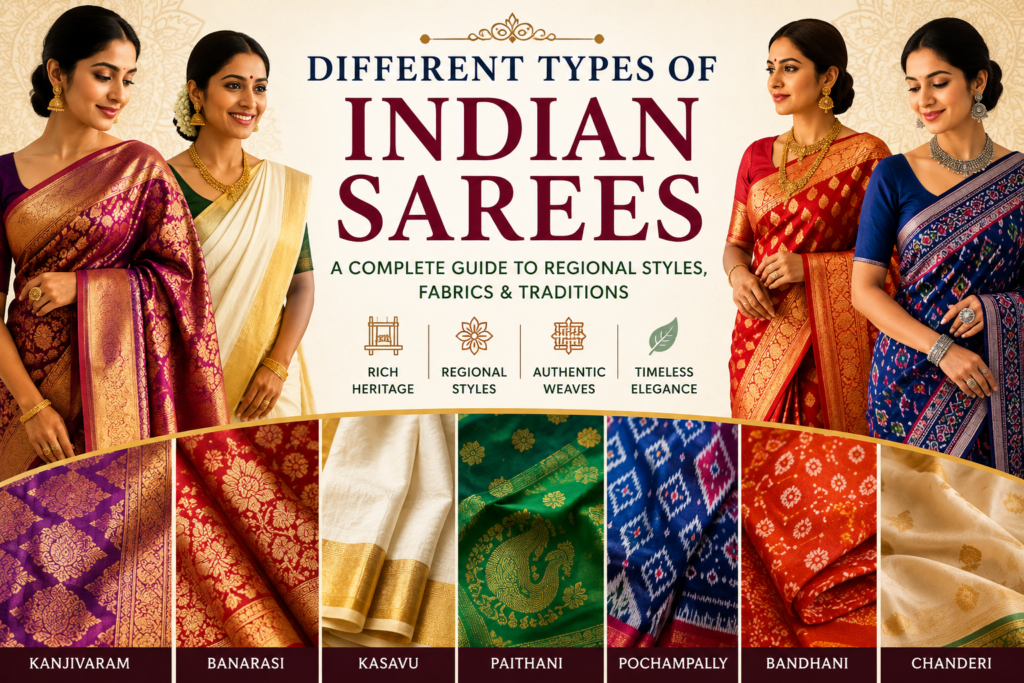
India’s rich textile heritage is beautifully reflected in its diverse saree traditions. Every region has developed its own weaving techniques, fabrics, motifs, and cultural influences over centuries, making the saree more than just a garment—it’s a symbol of identity, artistry, and tradition. From the luxurious silk drapes of South India to the intricate brocades of North India and the elegant handloom creations of the East and West, each saree tells a unique story.
Whether you’re a bride searching for the perfect wedding saree, a fashion enthusiast exploring traditional Indian sarees, or someone looking to understand India’s weaving legacy, learning about the different types of Indian sarees helps you appreciate the craftsmanship behind every weave.
History and Origin of Indian Sarees
The word “Saree” is derived from the Sanskrit word “Sati”, meaning a long strip of cloth. Historical evidence suggests that sarees have been worn in the Indian subcontinent for over 5,000 years, with references found in the Indus Valley Civilization and ancient Vedic literature.
Initially, sarees were simple unstitched garments made from cotton, suitable for India’s warm climate. As trade routes expanded and royal patronage encouraged textile innovation, weaving techniques became increasingly sophisticated. Different kingdoms developed distinctive styles using locally available fibers, dyes, and artistic traditions.
During the Mughal period, intricate embroidery, brocade weaving, and zari work gained popularity, giving rise to luxurious sarees like the famous Banarasi. Southern dynasties nurtured silk weaving traditions that evolved into iconic Kanjivaram and Mysore Silk sarees. Eastern India became known for its artistic storytelling through woven motifs, while western regions perfected tie-and-dye and double ikat techniques.
Today, Indian sarees represent centuries of cultural evolution, preserving regional identities while adapting to contemporary fashion trends. Many traditional sarees now carry GI (Geographical Indication) Tags, recognizing their authenticity and protecting the heritage of local weaving communities.
Different Types of Indian Sarees by Region
South Indian Sarees
South India is renowned for producing some of India’s most luxurious silk sarees. Rich temple traditions, vibrant colors, and intricate zari work define many of these regional masterpieces.
Kanjivaram Saree (Tamil Nadu)
The Kanjivaram Saree is considered the queen of silk sarees. Handwoven in Kanchipuram using pure mulberry silk and genuine zari, these sarees feature temple borders, floral motifs, peacocks, elephants, and traditional patterns.
Fabric: Pure Mulberry Silk
Weaving Style: Heavy silk with contrast borders
Best For: Weddings, bridal wear, festivals
Kasavu Saree (Kerala)
The elegant Kasavu Saree is Kerala’s traditional attire, instantly recognizable by its ivory body and golden zari border. Modern versions incorporate colorful borders and contemporary designs while preserving the timeless aesthetic.
Fabric: Cotton or Cotton-Silk Blend
Weaving Style: Handloom with zari borders
Best For: Onam, Vishu, temple festivals, weddings
Mysore Silk Saree (Karnataka)
Known for its smooth texture and understated elegance, the Mysore Silk Saree is crafted using high-quality silk and fine gold zari. Its minimalist designs make it perfect for both formal and festive occasions.
Fabric: Pure Silk
Weaving Style: Lightweight silk weaving
Best For: Office events, celebrations, weddings
Gadwal Saree (Telangana)
The Gadwal Saree combines cotton bodies with luxurious silk borders and richly woven pallus. This unique construction makes it comfortable while retaining a regal appearance.
Fabric: Cotton with Silk Borders
Weaving Style: Interlocking weave
Best For: Religious ceremonies and festivals
Pochampally Saree (Telangana)
Famous for its vibrant geometric designs, the Pochampally Saree uses the intricate Ikat dyeing technique where threads are dyed before weaving.
Fabric: Silk or Cotton
Weaving Style: Ikat
Best For: Contemporary ethnic fashion
Konrad Saree (Tamil Nadu)
Konrad sarees feature bold temple motifs and striking color combinations inspired by South Indian temple architecture.
Fabric: Silk
Weaving Style: Traditional temple weaving
Best For: Bridal ceremonies and cultural events
Dharmavaram Saree (Andhra Pradesh)
The Dharmavaram Saree is known for broad borders, rich pallus, and muted body colors contrasted with vibrant zari work.
Fabric: Silk
Weaving Style: Heavy silk weaving
Best For: Bridal wear and grand celebrations
North Indian Sarees
North India offers a rich variety of sarees celebrated for intricate embroidery, luxurious brocade work, and royal craftsmanship.
Banarasi Saree (Uttar Pradesh)
Among the most famous Indian wedding sarees, the Banarasi Saree is woven with luxurious silk and elaborate gold or silver zari. Mughal-inspired floral vines, paisleys, and intricate brocade patterns make it a timeless bridal favorite.
Fabric: Silk
Weaving Style: Brocade with zari
Best For: Weddings, receptions, festive occasions
Chikankari Saree (Uttar Pradesh)
Originating from Lucknow, Chikankari Sarees showcase delicate hand embroidery on lightweight fabrics like cotton, georgette, chiffon, and muslin.
Fabric: Cotton, Georgette, Chiffon
Weaving Style: Hand embroidery
Best For: Summer wear, office, casual elegance
Phulkari Saree (Punjab)
Inspired by Punjab’s vibrant embroidery tradition, Phulkari Sarees feature colorful floral needlework symbolizing prosperity and celebration.
Fabric: Cotton, Silk
Technique: Floral embroidery
Best For: Festivals and family functions
Pashmina Weaving (Kashmir)
Although traditionally associated with shawls, Pashmina weaving has influenced luxury sarees crafted from fine wool blends featuring exquisite embroidery.
Fabric: Fine Wool
Technique: Hand weaving
Best For: Winter weddings and formal occasions
East Indian Sarees
Eastern India is home to artistic handloom traditions known for storytelling motifs, lightweight fabrics, and exceptional craftsmanship.
Tant Saree (West Bengal)
The Tant Saree is an everyday favorite due to its breathable cotton fabric and elegant woven borders.
Fabric: Cotton
Best For: Daily wear and office
Baluchari Saree (West Bengal)
Baluchari sarees are famous for depicting mythological stories woven directly into the pallu using silk threads.
Fabric: Silk
Best For: Cultural events and weddings
Sambalpuri Saree (Odisha)
Created using the intricate Ikat technique, Sambalpuri Sarees feature geometric and nature-inspired motifs.
Fabric: Cotton or Silk
Best For: Festivals and traditional occasions
Muga Silk Saree (Assam)
Made from rare golden Muga silk, these sarees become shinier with age and are prized for their durability.
Fabric: Muga Silk
Best For: Luxury bridal wear
Bhagalpuri Tussar Saree (Bihar)
Known as the Silk City of India, Bhagalpur produces beautiful Tussar Silk Sarees with natural textures and earthy elegance.
Fabric: Tussar Silk
Best For: Formal occasions
Bomkai Saree (Odisha)
Bomkai sarees combine embroidery and weaving to create distinctive tribal-inspired motifs.
Fabric: Cotton and Silk
Best For: Festivals and cultural celebrations
West & Central Indian Sarees
Western India is famous for colorful dyeing techniques and luxurious silk weaving traditions.
Paithani Saree (Maharashtra)
The Paithani Saree is recognized by vibrant peacock motifs and handwoven zari borders.
Fabric: Silk
Best For: Maharashtrian weddings
Nauvari Saree (Maharashtra)
The nine-yard Nauvari Saree is traditionally draped without a petticoat, allowing greater mobility while maintaining elegance.
Best For: Traditional ceremonies
Bandhani Saree (Gujarat & Rajasthan)
Bandhani sarees showcase centuries-old tie-and-dye craftsmanship with colorful dotted patterns.
Fabric: Cotton, Silk, Georgette
Best For: Festivals and casual celebrations
Patola Saree (Gujarat)
The Patola Saree is one of India’s finest handwoven textiles, produced using the complex double Ikat technique that can take months to complete.
Fabric: Silk
Best For: Luxury collections and weddings
Chanderi Saree (Madhya Pradesh)
Lightweight and elegant, Chanderi Sarees blend silk and cotton with delicate zari work, making them ideal for graceful festive dressing.
Fabric: Silk-Cotton Blend
Best For: Engagements and festive wear
Popular Saree Fabrics and Weaving Techniques
Common Saree Fabrics
Fabric | Characteristics | Best For |
Silk | Rich, luxurious, durable | Weddings |
Cotton | Breathable, lightweight | Daily and office wear |
Chiffon | Soft, flowing | Parties |
Georgette | Drapes beautifully | Modern occasions |
Linen | Comfortable and elegant | Formal office wear |
Tussar Silk | Natural texture | Festive wear |
Muga Silk | Rare golden silk | Luxury occasions |
Traditional Weaving Techniques
Some of India’s finest sarees are distinguished by traditional weaving methods passed down through generations:
- Handloom Weaving: Entire saree woven manually by skilled artisans.
- Ikat: Threads are dyed before weaving to create striking geometric patterns.
- Tie and Dye: Used in Bandhani sarees to produce intricate dotted designs.
- Brocade: Rich silk weaving with gold and silver zari.
- Zari Work: Metallic thread embroidery for luxurious finishes.
- Hand Embroidery: Techniques like Chikankari and Phulkari add artistic detailing.
How to Identify an Authentic Indian Handloom Saree
With the growing popularity of handloom textiles, knowing how to identify genuine sarees is essential.
Look for these authenticity markers:
- GI Tag: Confirms the saree originates from its registered geographical region.
- Silk Mark Certification: Ensures genuine silk quality.
- Handloom Mark: Certifies authentic handwoven products.
- Inspect the weaving for slight natural irregularities—a hallmark of handmade craftsmanship.
- Purchase from trusted boutiques, government emporiums, certified handloom stores, or reputable online retailers specializing in authentic Indian textiles.
Conclusion
The different types of Indian sarees showcase the incredible diversity of India’s textile heritage. From the regal elegance of Kanjivaram and Banarasi to the timeless simplicity of Kasavu, the artistic storytelling of Baluchari, and the vibrant craftsmanship of Patola and Bandhani, every saree reflects centuries of tradition, skilled craftsmanship, and regional identity.
Whether you’re choosing a bridal saree, a festive drape, or an everyday handloom masterpiece, understanding fabrics, weaving techniques, and regional specialties helps you make an informed purchase. Explore authentic handcrafted collections, support India’s weaving communities, and celebrate the timeless beauty of Indian sarees that continue to inspire generations.
.